
Key Differences Every Engineer Should Know
In modern construction and retrofitting, the choice between post-installed reinforcing bars and anchors is crucial for ensuring structural integrity and performance. Though they may appear similar at a glance, understanding their fundamental differences is essential for engineers designing safe and efficient concrete connections.
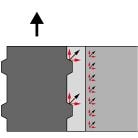
Post-installed anchors are typically designed using anchor theory, which focuses on the mechanical behavior of the anchor element embedded into existing concrete (Steel to concrete). By contrast, post-installed reinforcing bars (PIR) are integrated with reinforced concrete theory principles (Concrete to concrete). It considers how rebars interact with the concrete, balancing tensile and compressive forces within the member.

Figure 1: Anchor Theory vs Post-installed Rebar Theory
Design Standards Guiding Design Approaches
Different design standards guide the two systems. Anchors are designed following EN 1992-4 / ETAG 001 Annex C, which addresses anchorage to concrete and specific anchor failure modes. Post-installed rebars fall under EN 1992-1-1, the main reinforced concrete design standard emphasizing development lengths and load equilibrium.
Load Type and Transfer Mechanisms
Anchors primarily resist tension, shear, or combined loading, relying on direct adhesion or mechanical interlock with concrete to transfer forces. In contrast, post-installed rebars are mainly designed for tension and compression as part of the reinforcement system in concrete, transferring loads through bond development and interaction with the concrete matrix.

Failure Modes
Typical failure modes for anchors include steel fracture, pullout from the concrete, splitting cracks around the anchor, and concrete breakout where the surrounding concrete fails in a cone shape. Post-installed rebars mainly fail by steel fracture or bond failure (pullout), but they are less prone to splitting or concrete breakout due to the reinforced concrete acting as a strut-and-tie system.
Concrete Cover Requirements
Minimum concrete cover for anchors is specified by European Technical Assessment (ETA) guidelines to prevent concrete breakout and ensure durability. For post-installed rebars, cover requirements follow EAD 330087 and EN 1992-1-1 standards, aligning them with cast-in-place reinforcement for effective load transfer and corrosion protection.
Key Takeaways
Understanding these differences enables engineers to select the right connection system for their project, ensuring safety, performance, and compliance. Post-installed rebars integrate with reinforced concrete design and allow structural modifications, while anchors are preferred for straightforward fastening with quick installation and direct load transfer.
Reference:
European Committee for Standardization. (2023). EN 1992-1-1: Eurocode 2: Design of concrete structures — Part 1-1: General rules and rules for buildings.
European Organization for Technical Assessment. (2023). European Technical Assessment (ETA).
European Organisation for Technical Approvals. (2010). ETAG 001: Metal anchors for use in concrete, Annex C: Design method C.
European Organisation for Technical Assessment. (2018). EAD 330087-00-0601: Systems for post-installed rebar connections with mortar.